No factory rails? No problem. Here’s how to safely carry a kayak on a naked roof — and which rack styles actually work.
Transporting a kayak without factory roof rails might seem impossible — but there are solid options. From foam block systems to temporary crossbars and hitch-based solutions, your choice depends on how often you carry your kayak, what kind of car you drive, and how comfortable you are with temporary setups.
Key Takeaways:
- Even cars without roof rails can carry kayaks using temporary or rear-mounted racks.
- Foam block kits are cheap but need careful strapping and aren’t great for long trips.
- Temporary crossbars offer stability but require straps or suction cups to stay secure.
- Hitch-mounted T-racks or vertical cradles are often safer than roof racks.
- Always factor in paint protection, lift height, laws, and solo loading frequency.
Why This Is a Common Problem?
Most kayak rack systems assume your car has something to mount to — factory crossbars, raised side rails, flush rails, or a roof track. But what if you have a small sedan, coupe, or compact crossover with a completely bare roof?
Many people assume they’re out of luck — or that they’ll need to spend $500+ to retrofit an OEM rail system. Fortunately, there are several types of kayak carriers designed specifically for vehicles without roof rails, and depending on your budget and frequency of use, some of them work surprisingly well.
This guide walks you through each option so you can safely transport your kayak without factory roof hardware — whether it’s a short paddle trip or a full cross-country haul.
The 4 Best Kayak Rack Styles for Cars Without Roof Rails
1. Foam Block Kits (with Straps Through the Doors)
Featured product
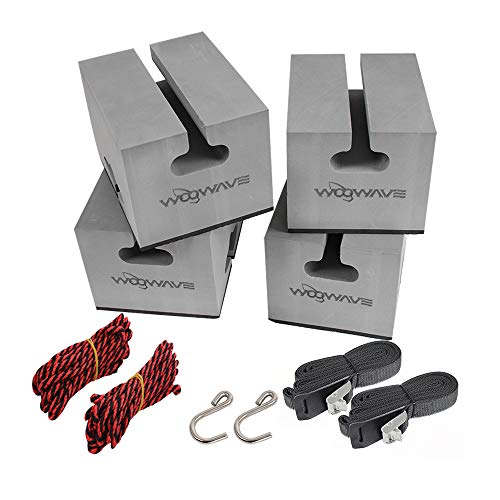
WOOWAVE Canoe Carrier Deluxe Carrier Kit…
This affordable foam-block canoe carrier makes transporting your canoe simple. Four non-slip EVA foam blocks fit round, square and oval roof bars while protecting your canoe and vehicle from scratches. The included cam-buckle tie-downs and load straps with S-hooks provide secure mounting. Lightweight and easy to install, the complete kit packs neatly into the included storage bag.
Only 1 left in stock – order soon.
As an Amazon Associate, the site owner may earn from qualifying purchases.
Best for: Occasional use, short distances, budget-conscious setups
Foam block kits are the simplest and most accessible kayak-carrying solution. They consist of two foam cradles (usually with non-slip bottoms) that sit on your car roof, along with cam straps or ratchet straps that pass through your open car doors to anchor the kayak and pads in place.
Setup takes 5–10 minutes, and there’s no permanent installation required. These kits work with almost any car — but you’ll need to be careful about strap placement, weather exposure, and making sure everything stays centered.
Pros:
- Very affordable
- No tools or hardware required
- Fits virtually any car
Cons:
- Can compress roof seals over time
- Not ideal for highway speeds or long hauls
- Offers minimal security or theft protection
2. Temporary Roof Rack Systems (Strap-On or Suction Cup Crossbars)

Featured product
HEYTRIP Universal Soft Roof Rack Pads for…
The WOOWAVE soft roof rack provides a simple, versatile way to carry kayaks, surfboards, paddleboards, canoes and other outdoor gear. Its 33-inch EPE foam pads feature durable, UV-resistant nylon covers to protect your vehicle and equipment. Strong waterproof tie-down straps ensure secure transport, while the universal design fits most vehicles. Includes straps, tie-down rope, quick loops and storage bag.
In Stock
As an Amazon Associate, the site owner may earn from qualifying purchases.
Best for: Frequent kayakers who want more stability than foam blocks
If you’re looking for something more secure than foam but still removable, consider temporary roof rack kits. These systems use either door jamb anchors or industrial suction cups to mount crossbars directly to your car’s roof. Once attached, you can use standard kayak cradles or J-racks just like you would with permanent rails.
Strap-on models loop through your door frames and anchor inside. Suction cup systems like the SeaSucker use vacuum mounts and are surprisingly strong, even at highway speeds.
Pros:
- Offers a real crossbar surface
- Works with most universal kayak cradles
- Much more secure than foam alone
Cons:
- More expensive than foam kits
- Can leave marks or stress door seals if overtightened
- Still not as stable as factory-mounted racks
3. Hitch-Mounted Kayak Racks (Vertical or “Goalpost” Style)
Best for: Cars with a hitch receiver, especially sedans or compact SUVs
If your car has a 1.25″ or 2″ hitch receiver, you can avoid the roof entirely by using a rear-mounted kayak rack. These typically fall into two styles:
- Vertical kayak racks that cradle the kayak upright behind the vehicle
- T-style “goalpost” racks that support the back end of the kayak while the front sits on the roof or windshield
This method is excellent for long kayaks or heavier boats that are tough to lift overhead. It also eliminates wind drag and improves fuel efficiency vs. rooftop options.
Pros:
- No lifting overhead
- Reduces wind resistance
- Easier loading for solo paddlers
Cons:
- Requires a hitch receiver
- Blocks trunk access while loaded
- Rear overhang may be an issue on small cars
4. Folding or Inflatable Kayak Options (as an Alternative)
Best for: Urban dwellers, limited storage, compact vehicles
This isn’t technically a rack — but it’s worth including. If you’re struggling to find a kayak rack solution that works with your car and budget, you might consider a foldable or inflatable kayak instead. These models pack down small enough to fit in your trunk and require no rack at all.
It’s not for everyone — inflatables paddle differently and require more drying/maintenance — but for casual paddlers, it solves the transport problem completely.
Pros:
- No rack required at all
- Ultra-portable and storage-friendly
- Great for apartments or shared vehicles
Cons:
- Not as rugged or fast as hardshell kayaks
- Higher upfront cost
- Requires drying and storage management
What to Consider Before You Buy
Roof Protection and Paint Damage
All of the rack types above involve direct contact with your car’s roof, and that brings risk.
Foam blocks and temporary crossbars can trap dirt underneath or compress soft roof paint — especially if not centered properly or used in bad weather.
To protect your paint:
- Use clean microfiber cloths under contact points
- Avoid strapping down too tight — especially with ratchet straps
- Rinse your roof before mounting, especially after driving dusty roads
- Consider clear vinyl film or rubber pads in frequent-use spots
Strap Routing and Door Seals
Foam and strap-on systems require you to run straps through your open doors, which means your kayak rack will pinch the weather seals when closed. Over time, this can flatten the rubber and lead to minor leaks or wind noise.
If you’ll be mounting regularly, consider:
- Reinforced strap covers
- Shorter cam straps (easier than long ratchets)
- Avoiding use in freezing conditions (straps can freeze inside doors)
- Suction-based systems, which don’t involve your doorframe at all
Loading Height and Solo Use
If your car is low (like a sedan or coupe), rooftop loading isn’t too bad. But if you’re on the shorter side — or loading solo — even a compact kayak can be awkward without a helper or step stool.
This is where hitch-mounted solutions really shine, allowing you to lift just 2–3 feet off the ground.
Also consider:
- Your height + kayak length
- How far the kayak overhangs the windshield or rear bumper
- Whether you’ll be carrying paddles, vests, or gear with it
Frequency of Use vs Permanent Racks
If you’re kayaking every weekend, a temporary strap system will quickly get old. You may want to invest in a professional rail install or upgrade to a trailer. But if you’re only transporting a kayak a few times per year, foam or strap kits make a lot more sense.
Ask yourself:
- Am I paddling weekly, or seasonally?
- Can I store roof hardware off-season?
- Would I prefer something I can install in under 10 minutes?
Which Kayak Rack Is Best for Your Bare-Roof Car?
| Scenario | Best Rack Style |
|---|---|
| You paddle a few times a year | Foam block kit with cam straps |
| You want better security/stability | Temporary crossbar system |
| You have a hitch receiver | Hitch-mounted T-style or vertical rack |
| You struggle with rooftop loading | Hitch-based or folding kayak |
| You want a clean roof when not in use | Foam blocks or foldable kayak |
In Summary
Cars without factory roof rails aren’t out of luck — there are several viable ways to transport a kayak safely and securely. From foam block kits for casual users to suction-cup crossbars and hitch-mounted goalposts, your solution depends on your car’s setup and how often you paddle.
The key is to match the rack style to your lifestyle: short trips, long road hauls, solo loading, or frequent weekend use all call for different setups. With the right approach, you don’t need a truck or a factory rack to enjoy the water.
Final Thoughts
If your car has a naked roof, you still have good options — but choosing the wrong kayak rack can lead to dented paint, wind noise, or worse. Take your time, weigh your loading ability, and think about where you’ll be paddling most often. Whether you go with a simple foam kit or a full rear-mounted setup, the right gear will make every launch feel a whole lot easier.